01/07/2026
EXPLORING IEEE 2883 – THE FUTURE OF DATA SANITIZATION
As our digital landscape evolves at a breakneck pace, safeguarding sensitive information is more critical than ever. Conventional file deletion techniques fail to fully eliminate data, exposing organizations to potential breaches and compliance risks. Enter the IEEE 2883 standard—a comprehensive framework designed to elevate data sanitization. Explore how this international standard empowers organizations to adopt secure and environmentally responsible practices now and in the future.
What is Data Sanitization?
The sanitization of data involves using specific methods to ensure it cannot be accessed and recovered.
This critical process addresses the following
- Data Resilience: Storage devices are designed to prevent data loss. This is why simply deleting a file does not mean it’s been eliminated.
- Data Forensics: Advanced tools can recover deleted files, heightening the risk of breaches.
- Compliance Requirements: Many industries demand strict adherence to sanitization protocols and record-keeping.
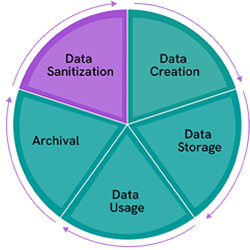
As the final phase of the data lifecycle, sanitization plays a vital role in preventing breaches and ensuring compliance.
IEEE 2883: A New Benchmark for Data Sanitization
IEEE 2883, introduced in 2022, is an international standard that provides detailed guidance on data sanitization methods. It bridges gaps in older standards, accommodating advancements in storage technology and sustainability.
KEY OBJECTIVES
- Defines what sanitization is and is not
- Enhances data security and privacy
- Aligns with compliance and regulatory demands
- Describes standardized data sanitization methods: Clear, Purge, and Destruct
- Covers media-specific and interface-specific sanitization techniques
- Contains guidance for composite devices like printers, mobile devices, and gaming systems
- Includes sustainability as part of sanitization method decision-making
- Lists upcoming storage technologies to be aware of
UNDERSTANDING THE SANITIZATION METHODS
CLEAR
Definition: Logical techniques that remove data from accessible storage areas, making it unrecoverable through simple methods.
Methods: Formatting or deallocation

PURGE
Definition: Advanced logical or physical techniques that eliminate data, ensuring recovery is infeasible even with state-of-the-art techniques.
Methods: Cryptographic erase, block erase, and overwrite

DESTRUCT
Definition: Physical destruction that leaves devices permanently unusable.
Methods: Disintegrate, melt, and incinerate
Choosing the appropriate sanitization method involves careful assessment of your organization’s data privacy policies, risk tolerance, and sustainability goals. IEEE 2883 addresses both security demands and environmental considerations.
VERIFICATION
How do you know if sanitization worked? IEEE 2883 specifies verification steps based on the sanitization type. For clear or purge, the standard requires confirmation that the command was performed. If the device underwent destruction, verification includes physical inspection of the results.
Documentation
All sanitization events must be documented. IEEE 2883 defers to ISO/IEC 27040 standards. Records should include the following:
- Who performed the sanitization and when/where it was performed
- What equipment and which sanitization method was used: clear, purge, or destruct
- Which sanitization technique was utilized and the result: pass or fail
- What verification was used and the result
- What the final disposition of the media was (example: reused)
- Proof of sanitization is generally provided through a certificate of destruction along with a detailed workflow log that includes sanitization, verification, and disposition information.
THE EVOLUTION OF DATA SANITIZATION
A comparison of data sanitization standards from oldest to newest:
| STANDARD | YEAR INTRODUCED | METHODS | NOTES |
|---|---|---|---|
| DOD 5220.022-M | 1995 & 2006 update Now obsolete |
3 or 7-pass overwriting | Not effective for SSD storage |
| NIST 800-88 | 2006 & 2014 update | Clear, Purge, & Destroy using various techniques | Addresses a variety of storage devices and interfaces |
| IEEE 2883 | 2022 | Clear, Purge, & Destruct using various techniques | Addresses a variety of storage devices & interfaces, including newer technologies |
A MODERN APPROACH TO DATA SANITIZATION
IEEE 2883 addresses numerous challenges that older standards do not.
- NVMe, SAS, SATA storage devices have been further defined and or have expanded features
- HDD and NAND storage (SSD) densities have increased requiring better physical destruction techniques
- Growth in devices with embedded storage (IoT devices, printers, and mobile devices)
- Introduces environmental impact as part of the risk assessment analysis
- Aligns with the ISO/IEC 27040 and is written so there can be compliance with requirements and regulations
- As an international standard, it ensures cross-border regulatory compliance
By addressing emerging technologies while integrating considerations for environmental impacts, IEEE 2883 supports a secure and sustainable digital future.
FINAL THOUGHTS
IEEE 2883 sets a new standard for organizations seeking robust, forward-looking data sanitization practices. By aligning with this framework, businesses can enhance security, build trust, and embrace sustainability.
If you have questions about IEEE 2883, please reach out to us.
REFERENCES
FEATURED
Join Sage at the Gartner IT Infrastructure, Operations & Cloud Strategies Conference 2026 in Las Vegas. Visit our booth to discover solutions that extend device lifecycles, reduce costs, maximize IT value, and support sustainability goals through repair, redeployment, refurbishment, remarketing, and recycling services.

MOST RECENT
Removing hard drives before IT asset disposal may seem like a security best practice, but it can create gaps in visibility. Explore the overlooked risks in data destruction policies and how organizations can build a more secure, auditable ITAD process.
Your input can help future organizations make confident IT asset disposition decisions. Share an honest review on Gartner Peer Insights and tell others about Sage’s customer service, support, capabilities, and implementation experience. Your feedback helps us improve while supporting your peers with valuable, real-world insights.
Rising technology costs are pushing organizations to rethink device management. A repair-first IT asset lifecycle strategy can significantly reduce costs, extend hardware lifecycles, improve employee productivity, and support sustainability goals by maximizing the value of existing devices before considering replacement or recycling.
01/07/2026
EXPLORING IEEE 2883 – THE FUTURE OF DATA SANITIZATION
As our digital landscape evolves at a breakneck pace, safeguarding sensitive information is more critical than ever. Conventional file deletion techniques fail to fully eliminate data, exposing organizations to potential breaches and compliance risks. Enter the IEEE 2883 standard—a comprehensive framework designed to elevate data sanitization. Explore how this international standard empowers organizations to adopt secure and environmentally responsible practices now and in the future.
What is Data Sanitization?
The sanitization of data involves using specific methods to ensure it cannot be accessed and recovered.
This critical process addresses the following
- Data Resilience: Storage devices are designed to prevent data loss. This is why simply deleting a file does not mean it’s been eliminated.
- Data Forensics: Advanced tools can recover deleted files, heightening the risk of breaches.
- Compliance Requirements: Many industries demand strict adherence to sanitization protocols and record-keeping.
As the final phase of the data lifecycle, sanitization plays a vital role in preventing breaches and ensuring compliance.
IEEE 2883: A New Benchmark for Data Sanitization
IEEE 2883, introduced in 2022, is an international standard that provides detailed guidance on data sanitization methods. It bridges gaps in older standards, accommodating advancements in storage technology and sustainability.
KEY OBJECTIVES
- Defines what sanitization is and is not
- Enhances data security and privacy
- Aligns with compliance and regulatory demands
- Describes standardized data sanitization methods: Clear, Purge, and Destruct
- Covers media-specific and interface-specific sanitization techniques
- Contains guidance for composite devices like printers, mobile devices, and gaming systems
- Includes sustainability as part of sanitization method decision-making
- Lists upcoming storage technologies to be aware of
UNDERSTANDING THE SANITIZATION METHODS
CLEAR
Definition: Logical techniques that remove data from accessible storage areas, making it unrecoverable through simple methods.
Methods: Formatting or deallocation
PURGE
Definition: Advanced logical or physical techniques that eliminate data, ensuring recovery is infeasible even with state-of-the-art techniques.
Methods: Cryptographic erase, block erase, and overwrite
DESTRUCT
Definition: Physical destruction that leaves devices permanently unusable.
Methods: Disintegrate, melt, and incinerate
Choosing the appropriate sanitization method involves careful assessment of your organization’s data privacy policies, risk tolerance, and sustainability goals. IEEE 2883 addresses both security demands and environmental considerations.
VERIFICATION
How do you know if sanitization worked? IEEE 2883 specifies verification steps based on the sanitization type. For clear or purge, the standard requires confirmation that the command was performed. If the device underwent destruction, verification includes physical inspection of the results.
Documentation
All sanitization events must be documented. IEEE 2883 defers to ISO/IEC 27040 standards. Records should include the following:
- Who performed the sanitization and when/where it was performed
- What equipment and which sanitization method was used: clear, purge, or destruct
- Which sanitization technique was utilized and the result: pass or fail
- What verification was used and the result
- What the final disposition of the media was (example: reused)
- Proof of sanitization is generally provided through a certificate of destruction along with a detailed workflow log that includes sanitization, verification, and disposition information.
THE EVOLUTION OF DATA SANITIZATION
A comparison of data sanitization standards from oldest to newest:
| STANDARD | YEAR INTRODUCED | METHODS | NOTES |
|---|---|---|---|
| DOD 5220.022-M | 1995 & 2006 update Now obsolete |
3 or 7-pass overwriting | Not effective for SSD storage |
| NIST 800-88 | 2006 & 2014 update | Clear, Purge, & Destroy using various techniques | Addresses a variety of storage devices and interfaces |
| IEEE 2883 | 2022 | Clear, Purge, & Destruct using various techniques | Addresses a variety of storage devices & interfaces, including newer technologies |
A MODERN APPROACH TO DATA SANITIZATION
IEEE 2883 addresses numerous challenges that older standards do not.
- NVMe, SAS, SATA storage devices have been further defined and or have expanded features
- HDD and NAND storage (SSD) densities have increased requiring better physical destruction techniques
- Growth in devices with embedded storage (IoT devices, printers, and mobile devices)
- Introduces environmental impact as part of the risk assessment analysis
- Aligns with the ISO/IEC 27040 and is written so there can be compliance with requirements and regulations
- As an international standard, it ensures cross-border regulatory compliance
By addressing emerging technologies while integrating considerations for environmental impacts, IEEE 2883 supports a secure and sustainable digital future.
FINAL THOUGHTS
IEEE 2883 sets a new standard for organizations seeking robust, forward-looking data sanitization practices. By aligning with this framework, businesses can enhance security, build trust, and embrace sustainability.
If you have questions about IEEE 2883, please reach out to us.
REFERENCES
FEATURED
Join Sage at the Gartner IT Infrastructure, Operations & Cloud Strategies Conference 2026 in Las Vegas. Visit our booth to discover solutions that extend device lifecycles, reduce costs, maximize IT value, and support sustainability goals through repair, redeployment, refurbishment, remarketing, and recycling services.
MOST RECENT
Removing hard drives before IT asset disposal may seem like a security best practice, but it can create gaps in visibility. Explore the overlooked risks in data destruction policies and how organizations can build a more secure, auditable ITAD process.
Your input can help future organizations make confident IT asset disposition decisions. Share an honest review on Gartner Peer Insights and tell others about Sage’s customer service, support, capabilities, and implementation experience. Your feedback helps us improve while supporting your peers with valuable, real-world insights.
Rising technology costs are pushing organizations to rethink device management. A repair-first IT asset lifecycle strategy can significantly reduce costs, extend hardware lifecycles, improve employee productivity, and support sustainability goals by maximizing the value of existing devices before considering replacement or recycling.
Get Started. Reach Out Today.
"*" indicates required fields
Recommended Articles

October 12, 2026
EVENT: Gartner® IT Infrastructure, Operations & Cloud Strategies Conference 2026
Join Sage at the Gartner IT Infrastructure, Operations & Cloud Strategies Conference 2026 in Las Vegas. Visit our booth to discover solutions that extend device lifecycles, reduce costs, maximize IT value, and support sustainability goals through repair, redeployment, refurbishment, remarketing, and recycling services.
August 26, 2026
Are Your Data Destruction Policies Reducing Risk…or Creating It?
Removing hard drives before IT asset disposal may seem like a security best practice, but it can create gaps in visibility. Explore the overlooked risks in data destruction policies and how organizations can build a more secure, auditable ITAD process.
July 21, 2026
Share Your Sage Experience on Gartner Peer Insights™
Your input can help future organizations make confident IT asset disposition decisions. Share an honest review on Gartner Peer Insights and tell others about Sage’s customer service, support, capabilities, and implementation experience. Your feedback helps us improve while supporting your peers with valuable, real-world insights.