06/10/2025
WHY SHREDDING ISN’T ALL IT’S CRACKED UP TO BE
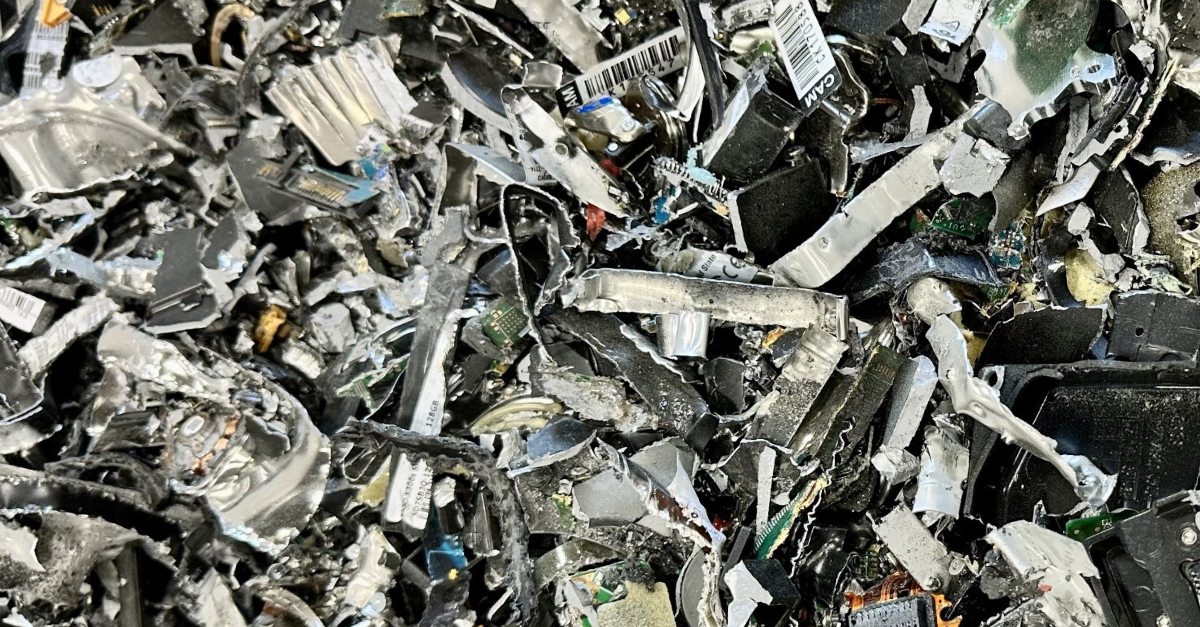
I hate to say it, but shredding has gaps (pardon the pun). While most ITAD providers hail the superiority of shredding data-bearing devices, we see it as a game of smoke and mirrors. Let’s look at what could go wrong with shredding as a data destruction method.
THE OLD SWITCHEROO
The most obvious problem with shredding assets is that all shredded hard drives look the same. Whether by accident or intentional, your super-critical data could be misplaced or left out of that batch of scrap metal. Unless you have the time to hand-feed those drives yourself, you really can’t prove that your data was destroyed.
While you might think this switch-up is unlikely, there is a better approach. Secure data wiping data keeps everything intact, so if there is ever a question, you can verify the result. Modern erasure processes, aligned with NIST 800-88 and IEEE 2883, provide confirmation that data has been removed from each device. Instead of relying on an assumption, you have proof at the device level.
Is it worth the risk to wonder whether your drives actually received the service you paid for?
HIDDEN COSTS
Another common argument for shredding is cost. It’s true that wiping data requires specialized software and takes longer than shredding, but that is only part of the story.
Shredding equipment is expensive, requires ongoing maintenance, and comes with noise pollution and OSHA considerations. From to a total cost perspective, both methods require investment. Any ITAD company worth its weight will build this into their overall processing costs.
But when shredding is positioned as “cheap,” it raises a fair question: where are those costs actually being recovered? In some cases, it could be through downstream material recovery or e-waste handling practices that lack visibility.
With wiping, the process is measured, trackable, and tied directly to each asset removing ambiguity from both cost and outcome.
THE LOSS OF VALUE
It’s a fact that a shredded hard drive is worth next to nothing. Only in bulk do shredded materials generate minimal commodity value.
On the other hand, a wiped hard drive retains intrinsic market value. That means it reused, redeployed, or resold. Whether you choose to redeploy the asset within your organization or through a secondary market, you have the opportunity to recoup costs and extend the lifecycle of your IT investment.
When a hard drive is shredded, valuable materials like magnets, steel, aluminum, and plastic are all mixed together. This makes recovery less efficient and lowers the overall value.
The idea that shredding is the lower cost option often ignores the lost revenue potential of intact devices.
TREATING IT LIKE TRASH
How careful were you with the disposable cup you got your coffee in today? Did you carefully track it and handle it with a presence of mind that could allow it to be resold to another coffee drinker later? This may sound silly, but the reality is that when an ITAD company receives assets destined for shredding, the perception often shifts. These devices are seen as waste, not assets. That mindset can lead to less rigorous tracking and handling.
Compare that to a process built around wiping and reuse. Devices retain value so they are carefully inventoried, tracked, and properly processed. This mindset reinforces accountability and reduces risk. When assets matter, processes improve.
TRACEABILITY AND SUSTAINABILITY MATTER
Today, data destruction isn’t just about eliminating risk, it’s about proving secure standards and processing assets responsibly.
Shredding removes the ability to track individual devices once they enter the process. By contrast, software-based erasure creates a clear chain of custody and detailed record of activity, providing audit-ready documentation for each asset.
At the same time, sustainability expectations are increasing. Shredding destroys reuse potential and creates mixed-material waste streams that are more difficult to recover efficiently. Secure wiping allows devices to remain in circulation longer, supporting reuse, reduced waste, and lower environmental impact.
In a world where ESG goals and regulatory scrutiny are rising, traceability and sustainability are no longer optional, they are expected.
THE BOTTOM LINE
e-Waste is a trillion-dollar-a-year industry, and not all processes are as transparent as they seem. With that much at stake, it’s fair to ask whether shredding always delivers what it promises.
Wiping data from devices:
- Keeps the device intact and verifiable
- Provides trackable, documented proof of erasure
- Maintains asset value
- Supports more sustainable outcomes
If you are looking for a truly effective approach to data destruction, do your research. Find an ITAD partner that uses NIST 800-88 and IEEE 2883–aligned erasure protocols and tracks your devices with the intent to retain value.
Or, if you’re set on shredding, work with an e-Stewards–certified recycler so at least there is a strong governance framework in place.
WANT TO LEARN MORE?
Check out our other blog posts on data security:
- Are Your Data Destruction Policies Reducing Risk…or Creating It?
- Exploring IEEE-2883 – The Future of Data Sanitization
We also invite you to visit our Data Sanitization page to see how we handle data securely and sustainably or contact us to get a quote for your IT Asset Disposition needs.
FEATURED
Join Sage at the Gartner IT Infrastructure, Operations & Cloud Strategies Conference 2026 in Las Vegas. Visit our booth to discover solutions that extend device lifecycles, reduce costs, maximize IT value, and support sustainability goals through repair, redeployment, refurbishment, remarketing, and recycling services.

MOST RECENT
Removing hard drives before IT asset disposal may seem like a security best practice, but it can create gaps in visibility. Explore the overlooked risks in data destruction policies and how organizations can build a more secure, auditable ITAD process.
Your input can help future organizations make confident IT asset disposition decisions. Share an honest review on Gartner Peer Insights and tell others about Sage’s customer service, support, capabilities, and implementation experience. Your feedback helps us improve while supporting your peers with valuable, real-world insights.
Rising technology costs are pushing organizations to rethink device management. A repair-first IT asset lifecycle strategy can significantly reduce costs, extend hardware lifecycles, improve employee productivity, and support sustainability goals by maximizing the value of existing devices before considering replacement or recycling.
06/10/2025
WHY SHREDDING ISN’T ALL IT’S CRACKED UP TO BE
I hate to say it, but shredding has gaps (pardon the pun). While most ITAD providers hail the superiority of shredding data-bearing devices, we see it as a game of smoke and mirrors. Let’s look at what could go wrong with shredding as a data destruction method.
THE OLD SWITCHEROO
The most obvious problem with shredding assets is that all shredded hard drives look the same. Whether by accident or intentional, your super-critical data could be misplaced or left out of that batch of scrap metal. Unless you have the time to hand-feed those drives yourself, you really can’t prove that your data was destroyed.
While you might think this switch-up is unlikely, there is a better approach. Secure data wiping data keeps everything intact, so if there is ever a question, you can verify the result. Modern erasure processes, aligned with NIST 800-88 and IEEE 2883, provide confirmation that data has been removed from each device. Instead of relying on an assumption, you have proof at the device level.
Is it worth the risk to wonder whether your drives actually received the service you paid for?
HIDDEN COSTS
Another common argument for shredding is cost. It’s true that wiping data requires specialized software and takes longer than shredding, but that is only part of the story.
Shredding equipment is expensive, requires ongoing maintenance, and comes with noise pollution and OSHA considerations. From to a total cost perspective, both methods require investment. Any ITAD company worth its weight will build this into their overall processing costs.
But when shredding is positioned as “cheap,” it raises a fair question: where are those costs actually being recovered? In some cases, it could be through downstream material recovery or e-waste handling practices that lack visibility.
With wiping, the process is measured, trackable, and tied directly to each asset removing ambiguity from both cost and outcome.
THE LOSS OF VALUE
It’s a fact that a shredded hard drive is worth next to nothing. Only in bulk do shredded materials generate minimal commodity value.
On the other hand, a wiped hard drive retains intrinsic market value. That means it reused, redeployed, or resold. Whether you choose to redeploy the asset within your organization or through a secondary market, you have the opportunity to recoup costs and extend the lifecycle of your IT investment.
When a hard drive is shredded, valuable materials like magnets, steel, aluminum, and plastic are all mixed together. This makes recovery less efficient and lowers the overall value.
The idea that shredding is the lower cost option often ignores the lost revenue potential of intact devices.
TREATING IT LIKE TRASH
How careful were you with the disposable cup you got your coffee in today? Did you carefully track it and handle it with a presence of mind that could allow it to be resold to another coffee drinker later? This may sound silly, but the reality is that when an ITAD company receives assets destined for shredding, the perception often shifts. These devices are seen as waste, not assets. That mindset can lead to less rigorous tracking and handling.
Compare that to a process built around wiping and reuse. Devices retain value so they are carefully inventoried, tracked, and properly processed. This mindset reinforces accountability and reduces risk. When assets matter, processes improve.
TRACEABILITY AND SUSTAINABILITY MATTER
Today, data destruction isn’t just about eliminating risk, it’s about proving secure standards and processing assets responsibly.
Shredding removes the ability to track individual devices once they enter the process. By contrast, software-based erasure creates a clear chain of custody and detailed record of activity, providing audit-ready documentation for each asset.
At the same time, sustainability expectations are increasing. Shredding destroys reuse potential and creates mixed-material waste streams that are more difficult to recover efficiently. Secure wiping allows devices to remain in circulation longer, supporting reuse, reduced waste, and lower environmental impact.
In a world where ESG goals and regulatory scrutiny are rising, traceability and sustainability are no longer optional, they are expected.
THE BOTTOM LINE
e-Waste is a trillion-dollar-a-year industry, and not all processes are as transparent as they seem. With that much at stake, it’s fair to ask whether shredding always delivers what it promises.
Wiping data from devices:
- Keeps the device intact and verifiable
- Provides trackable, documented proof of erasure
- Maintains asset value
- Supports more sustainable outcomes
If you are looking for a truly effective approach to data destruction, do your research. Find an ITAD partner that uses NIST 800-88 and IEEE 2883–aligned erasure protocols and tracks your devices with the intent to retain value.
Or, if you’re set on shredding, work with an e-Stewards–certified recycler so at least there is a strong governance framework in place.
WANT TO LEARN MORE?
Check out our other blog posts on data security:
- Are Your Data Destruction Policies Reducing Risk…or Creating It?
- Exploring IEEE-2883 – The Future of Data Sanitization
We also invite you to visit our Data Sanitization page to see how we handle data securely and sustainably or contact us to get a quote for your IT Asset Disposition needs.
FEATURED
Join Sage at the Gartner IT Infrastructure, Operations & Cloud Strategies Conference 2026 in Las Vegas. Visit our booth to discover solutions that extend device lifecycles, reduce costs, maximize IT value, and support sustainability goals through repair, redeployment, refurbishment, remarketing, and recycling services.
MOST RECENT
Removing hard drives before IT asset disposal may seem like a security best practice, but it can create gaps in visibility. Explore the overlooked risks in data destruction policies and how organizations can build a more secure, auditable ITAD process.
Your input can help future organizations make confident IT asset disposition decisions. Share an honest review on Gartner Peer Insights and tell others about Sage’s customer service, support, capabilities, and implementation experience. Your feedback helps us improve while supporting your peers with valuable, real-world insights.
Rising technology costs are pushing organizations to rethink device management. A repair-first IT asset lifecycle strategy can significantly reduce costs, extend hardware lifecycles, improve employee productivity, and support sustainability goals by maximizing the value of existing devices before considering replacement or recycling.
Get Started. Reach Out Today.
"*" indicates required fields
Recommended Articles

October 12, 2026
EVENT: Gartner® IT Infrastructure, Operations & Cloud Strategies Conference 2026
Join Sage at the Gartner IT Infrastructure, Operations & Cloud Strategies Conference 2026 in Las Vegas. Visit our booth to discover solutions that extend device lifecycles, reduce costs, maximize IT value, and support sustainability goals through repair, redeployment, refurbishment, remarketing, and recycling services.
August 26, 2026
Are Your Data Destruction Policies Reducing Risk…or Creating It?
Removing hard drives before IT asset disposal may seem like a security best practice, but it can create gaps in visibility. Explore the overlooked risks in data destruction policies and how organizations can build a more secure, auditable ITAD process.
July 21, 2026
Share Your Sage Experience on Gartner Peer Insights™
Your input can help future organizations make confident IT asset disposition decisions. Share an honest review on Gartner Peer Insights and tell others about Sage’s customer service, support, capabilities, and implementation experience. Your feedback helps us improve while supporting your peers with valuable, real-world insights.